
Introduction
When people search for “Olive on the Buses,” they are often looking for more than just a sitcom character—they are searching for a television legend. Olive Rudge, the unforgettable sister of Stan Butler in the classic British sitcom On the Buses, became one of the most recognized comedy characters of the 1970s. With her sharp expressions, troubled marriage, and unforgettable family drama, Olive brought both humor and emotional depth to a show that became part of British television history.
Table of Contents
ToggleAlthough Olive herself was fictional, the woman behind the role—Anna Karen—gave the character real life and lasting charm. Her performance transformed Olive from a simple supporting character into a cultural icon. Anna Karen appeared in all 74 episodes of the sitcom as well as all three spin-off films, making her one of the most consistent and beloved stars of the franchise.
Even decades later, On the Buses continues to be remembered by classic comedy fans, and Olive remains one of the show’s most discussed personalities. Her story reflects not only British sitcom history but also the power of character acting, resilience, and unforgettable television writing.
Quick Facts Table
| Fact | Details |
|---|---|
| Full Character Name | Olive Rudge (née Butler) |
| Popular Name | Olive from On the Buses |
| Played By | Anna Karen |
| Profession (Character) | Housewife, later Bus Conductress |
| Brother | Stan Butler |
| Husband | Arthur Rudge |
| Mother | Mabel “Mum” Butler |
| First Appearance | On the Buses (1969) |
| Final Main TV Appearance | Series 7 (1973) |
| Actress Birthplace | Durban, South Africa |
| Birth Date (Anna Karen) | 19 September 1936 |
| Death Date | 22 February 2022 |
| Famous For | Playing Olive Rudge |
| Social Media | Not applicable (classic TV era) |
| Legacy | One of Britain’s most iconic sitcom roles |
Who Was Olive Rudge in On the Buses?
Olive Rudge was one of the central family characters in On the Buses, the hugely popular ITV sitcom that aired from 1969 to 1973. She was the younger sister of Stan Butler and the wife of Arthur Rudge, living in the often chaotic Butler household where arguments, complaints, and comedy filled nearly every scene. Her domestic life became one of the show’s strongest comic foundations.
She was written as a frustrated, emotional, and often unlucky woman whose marriage to Arthur was far from romantic. Their relationship was filled with sarcastic remarks and constant arguments, which became one of the sitcom’s recurring themes. Despite being the target of many jokes, Olive was never forgettable—she was bold, expressive, and impossible to ignore.
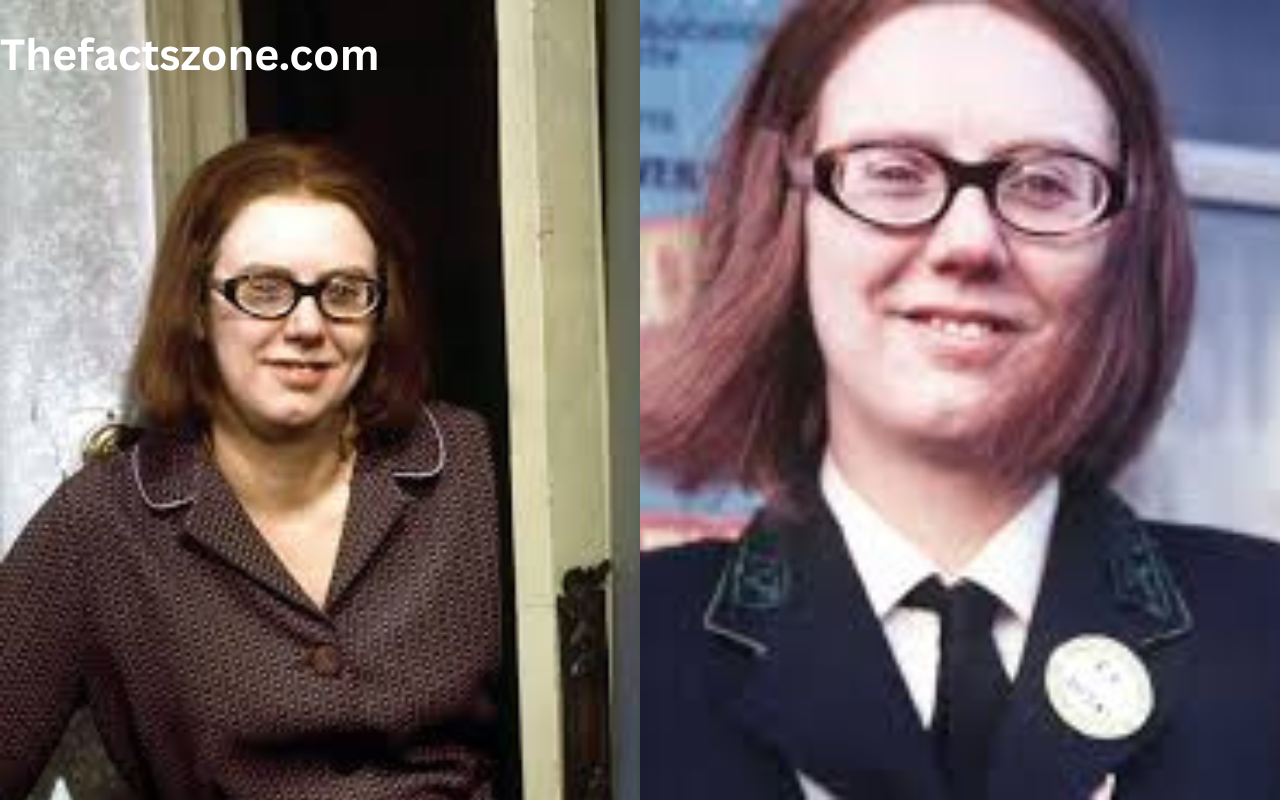
What made Olive especially memorable was the contrast between the character and the actress playing her. Anna Karen was actually glamorous in real life and even worked as a model, but for Olive she wore thick glasses, heavy padding, an unstylish wig, and plain clothing. She famously described Olive as “the ugliest woman on television,” showing just how much transformation went into the role.
Early Life of Anna Karen
Anna Karen was born as Ann Harrison McCall on 19 September 1936 in Durban, South Africa. Her father was Irish and worked as an accountant, while her mother was English. From a young age, she developed a strong interest in acting and performance, and by the age of fifteen, she had already joined the South African National Theatre.
Her early years were shaped by both ambition and courage. During apartheid-era South Africa, she reportedly broke racist laws by visiting the home of a Black stage manager from her theatre company. This decision reflected her independent spirit and personal values. Soon after, she was advised to leave South Africa and pursue her future elsewhere.
At just seventeen, she moved to London to chase her acting dream. Life there was not easy. She lived in a hostel in Paddington, attended the London School of Dramatic Art, and worked difficult jobs to support herself, including washing dishes in restaurants. She later revealed that she even worked as a striptease dancer at London’s Panama Club to earn better money and pay for drama school.
How She Became Olive on the Buses
Before becoming Olive, Anna Karen had already appeared in smaller acting roles, including Carry On Camping and the BBC sitcom Wild, Wild Women. It was during the production of Wild, Wild Women that writers Ronald Chesney and Ronald Wolfe noticed her talent and offered her the role that would change her career forever.
The role of Olive required complete transformation. Karen had to hide her natural beauty and create the exact opposite image—a tired, plain, frustrated housewife. She wore an unflattering wig, oversized glasses, and padding to create Olive’s signature appearance. It was a brave decision because such roles often led to typecasting, but Karen embraced it fully.
That decision proved life-changing. Olive quickly became one of the most recognized characters in British television comedy. Audiences remembered her expressions, her voice, and especially her endless battles with Arthur and her family. Instead of disappearing into the background, she became one of the show’s biggest identities.
Olive’s Family Life and Storylines
The Butler household was the heart of On the Buses, and Olive was central to its emotional chaos. Living with her brother Stan and her strong-willed mother Mum, she often found herself caught between family arguments and her own unhappy marriage. This domestic tension gave the sitcom much of its humor and realism.
Her marriage to Arthur Rudge was one of the show’s most famous relationships. Arthur constantly complained, insulted, and frustrated Olive, while she fought back with equal energy. Their love-hate relationship became a major part of the show’s identity. Though exaggerated for comedy, it also showed the emotional exhaustion of working-class family life.
In the 1971 film On the Buses, Olive becomes pregnant and later gives birth to a son named Arthur. In Mutiny on the Buses, she becomes pregnant again. By the final television series, Arthur leaves her, leading to one of the show’s biggest turning points—Olive’s divorce. The first episode of Series 7 was even titled “Olive’s Divorce,” marking her move toward independence.
Career Success Beyond On the Buses
Although Olive became her most famous role, Anna Karen’s acting career extended far beyond one sitcom. She remained active in film, theatre, and television for decades. She appeared in Carry On Loving, The Rag Trade, and many stage productions throughout the 1970s and 1980s.
From 1977 to 1978, she even reprised the Olive character in the revival of The Rag Trade, created by the same writers as On the Buses. This showed how strongly the character remained connected to her public image. Fans continued to associate her with Olive long after the original sitcom ended.
A new generation later discovered her through her recurring role as Aunt Sal in the BBC soap EastEnders, where she played the sister of Peggy Mitchell, portrayed by Barbara Windsor. This role helped prove that Karen was much more than a single sitcom character—she was a long-lasting television personality with real range.
Personal Life and Relationships
Anna Karen’s personal life was marked by both love and resilience. She was first married in 1957 to Richard Smart, and the couple lived in Italy for a period while he trained as an opera singer. However, the marriage eventually ended, and she returned to England.
In 1967, she married actor and comedian Terry Duggan, and they remained together until his death in 2008. She had no biological children of her own but lovingly raised Gloria, Duggan’s daughter from his first marriage. Their long marriage reflected stability and companionship away from the spotlight.
She was also famously close friends with Barbara Windsor. Their friendship began during Carry On Camping and lasted for decades. Barbara even left money to Anna Karen in her will, showing how strong their bond remained throughout life.
Net Worth and Financial Legacy
Because Olive was a fictional character, discussions of money naturally focus on Anna Karen herself. Unlike modern television stars who often build wealth through brand deals and social media, Karen belonged to a generation where actors mostly earned through steady work in television, theatre, and film.
Her income came from On the Buses, the spin-off films, theatre tours, convention appearances, and later her recurring work in EastEnders. She remained professionally active for decades, from 1959 until the late 2010s, which provided long-term career stability rather than sudden celebrity wealth.
Her true value, however, was not financial—it was cultural. Being remembered across generations for one iconic role is a form of success many actors never achieve. Olive gave her a place in television history that money alone could never replace.
Social Media and Modern Fan Following
Since Olive belonged to a classic television era, there were naturally no Instagram profiles, TikTok videos, or Twitter accounts attached to her fame. Anna Karen built her reputation in a time when television exposure mattered far more than digital branding.
Still, her legacy continues online through classic TV fan pages, YouTube interviews, nostalgia communities, and dedicated On the Buses discussion groups. Younger viewers continue discovering Olive through reruns, clips, and fan documentaries celebrating British sitcom history.
She also remained connected to audiences through fan conventions and special events. Reports show that she regularly appeared at comic cons and fan gatherings until at least 2019, proving that affection for Olive never truly faded.
Final Years and Lasting Legacy
Anna Karen sadly passed away on 22 February 2022 at the age of 85 after a house fire at her home in Ilford, London. News of her death led to an outpouring of tributes from fans, co-stars, and television lovers across Britain. She was remembered not only for her talent but also for her warmth and kindness.
Most tributes immediately returned to Olive—the role that made her unforgettable. Her performance had turned what could have been a simple supporting sitcom role into one of British television’s most iconic female comedy characters. Few supporting characters from that era remain so instantly recognizable today.
Even now, On the Buses continues to air in repeats, and Olive remains one of its strongest symbols. Her voice, expressions, and family arguments still entertain audiences decades later, proving that truly great character work never grows old.
Conclusion
Olive on the Buses was far more than just a sitcom character—she was a symbol of classic British comedy, working-class family life, and unforgettable television storytelling. Through arguments, heartbreak, frustration, and unexpected strength, Olive became a character viewers laughed at, sympathized with, and never forgot.
Behind that role, Anna Karen gave everything to make Olive feel real. Her willingness to transform herself completely for the character showed remarkable dedication and courage. She proved that sometimes the most powerful performances come not from glamour, but from honesty, vulnerability, and perfect comic timing.
As Olive on the Buses continues to entertain future generations, her story stands as a reminder of how resilience and purpose can shape a meaningful legacy. In a world that often celebrates perfection, Olive proved that imperfection can be unforgettable—and that is exactly why she remains timeless.